
Light Filtering vs. Blackout Cellular Shade Fabric: Which One Should You Choose?
Light filtering and blackout cellular shade fabrics ser…
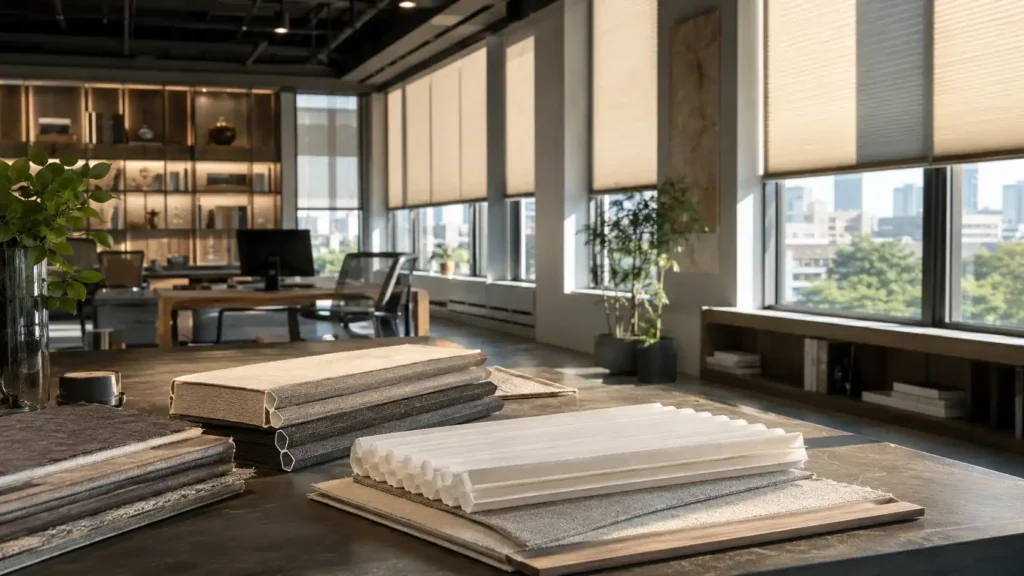
For buyers, designers & sourcing teams
CategoryUncategorized
Use this article as a technical reference. Contact us if you need fabric samples, specifications or project support.
Understanding Light Control in Cellular Shade Fabrics
Light control is one of the most important factors when selecting cellular shade fabric.
Although many honeycomb fabrics share a similar pleated structure, their performance can vary significantly depending on material construction, coating, color and internal layers.
For most projects, buyers usually choose between light filtering cellular fabric and blackout cellular fabric.
Understanding the difference helps manufacturers, distributors and project buyers select the right product for each application.
What Is Light Filtering Cellular Fabric?
Light filtering fabric allows natural daylight to enter the room while reducing glare and maintaining a degree of privacy.
Instead of completely blocking sunlight, the fabric softens and diffuses incoming light.
This creates a more comfortable indoor environment and is especially suitable for spaces where natural daylight is desirable.
Typical applications include:
- Living rooms
- Offices
- Dining areas
- Meeting rooms
- Reception spaces
- Commercial interiors
Light filtering cellular shades can create a bright and open atmosphere while helping reduce direct sunlight.
What Is Blackout Cellular Fabric?
Blackout cellular fabric is designed to block significantly more external light.
Depending on the construction, the material may include additional coatings, laminations or internal layers that improve light-blocking performance.
Common applications include:
- Bedrooms
- Hotels
- Media rooms
- Conference rooms
- Nurseries
- Privacy-sensitive spaces
Blackout fabrics are also often selected when greater control over external light is required.
Privacy Differences
Both fabric types can provide privacy, but their performance differs.
Light filtering fabric usually provides good daytime privacy while still transmitting diffused light.
Blackout fabric offers stronger privacy because it reduces both visibility and light transmission.
For applications where privacy is a priority, blackout fabric is generally the better option.
Thermal Performance
The honeycomb structure itself helps create insulating air pockets.
Both light filtering and blackout fabrics can contribute to improved thermal comfort.
However, blackout constructions may provide additional benefits because of their denser structure or added layers.
The actual insulation performance depends on the entire shade system, including pleat size, cell construction and installation.
Which Fabric Should B2B Buyers Choose?
The correct choice depends on the target market and application.
Choose light filtering fabric when the priority is:
- Natural daylight
- Soft indoor illumination
- Comfortable privacy
- Bright interiors
Choose blackout fabric when the priority is:
- Strong light blocking
- Increased privacy
- Bedrooms or hospitality
- Media or presentation spaces
For wholesalers and window covering brands, offering both options allows one product collection to serve a wider range of customers.
Final Consideration
Rather than selecting fabric based only on appearance, professional buyers should evaluate light transmission, privacy level, color, pleat stability and intended room type.
Physical samples are recommended before bulk ordering so that the actual performance can be evaluated under real lighting conditions.
Need help choosing the right cellular shade fabric?
Send us your application, light-control requirement, pleat size and estimated quantity. We can recommend suitable fabrics and sample options.
Related Articles
Explore more practical guides, product knowledge and window covering insights.
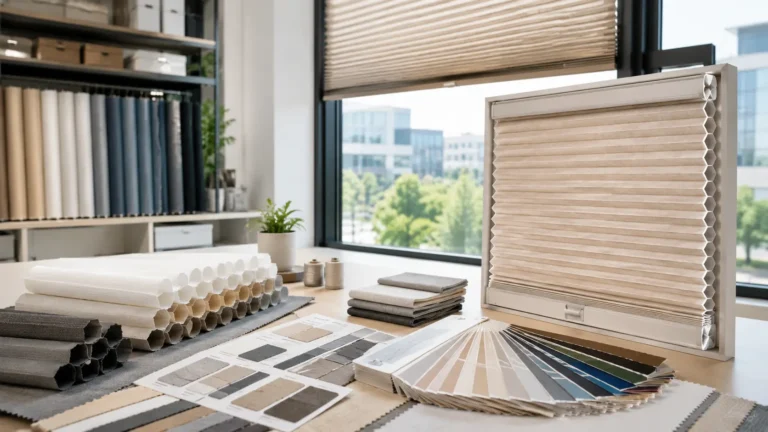
Honeycomb Shade Fabric: A Complete Guide to Performance,
Honeycomb shade fabric combines light control, thermal ins…
READ ARTICLE →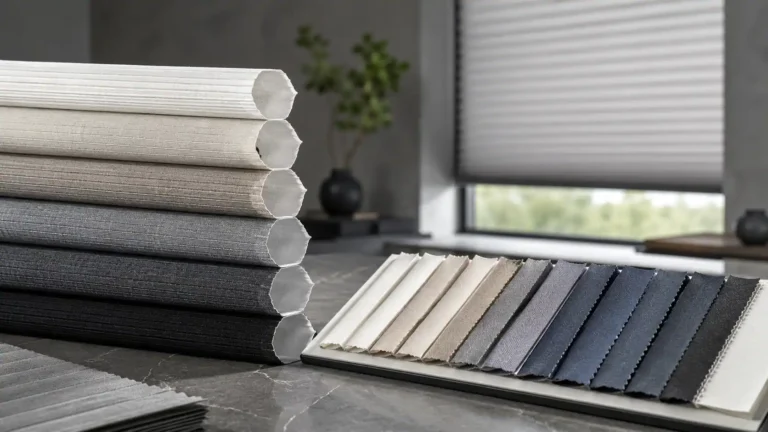
How B2B Buyers Should Evaluate a Cellular Shade Fabric S
Choosing a cellular shade fabric supplier requires more th…
READ ARTICLE →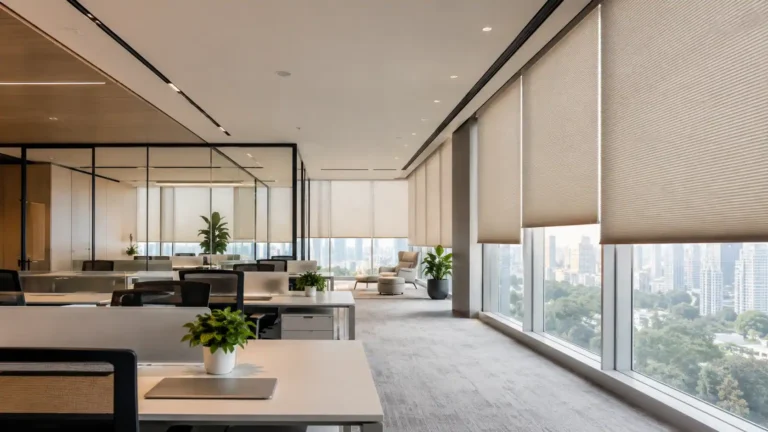
Single Cell vs. Double Cell Honeycomb Shades: Key Differ
Single-cell and double-cell honeycomb shades differ in str…
READ ARTICLE →