
How B2B Buyers Should Evaluate a Cellular Shade Fabric Supplier
Choosing a cellular shade fabric supplier requires more…
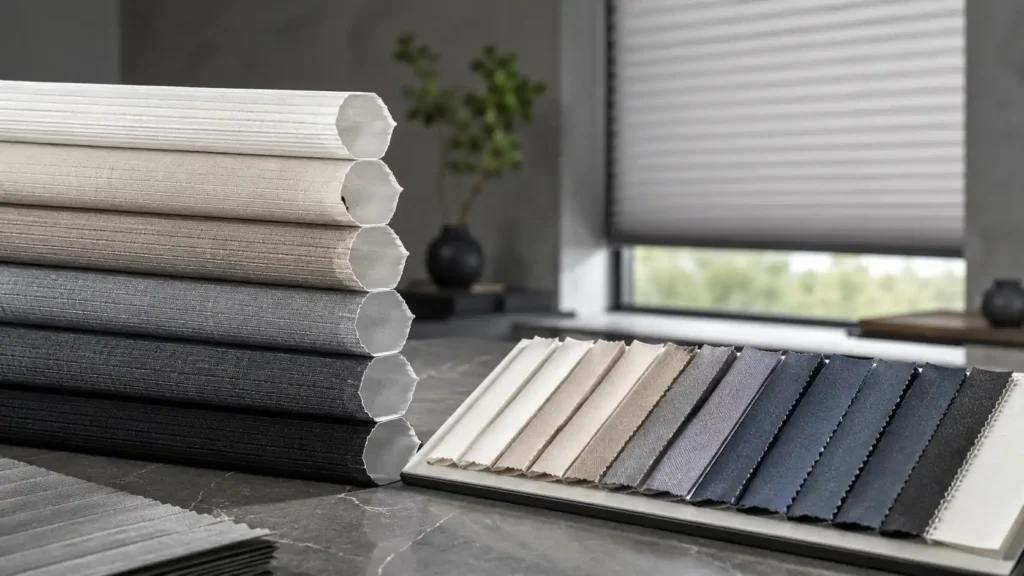
For buyers, designers & sourcing teams
CategoryUncategorized
Use this article as a technical reference. Contact us if you need fabric samples, specifications or project support.
Supplier Selection Is More Than Price
For B2B buyers, the lowest fabric price does not always create the lowest total purchasing cost.
Problems such as inconsistent color, unstable pleats, delivery delays or poor communication can create significant downstream costs.
A reliable cellular shade fabric supplier should therefore be evaluated across several areas.
Production Capacity
Production capacity is important for both normal orders and seasonal demand.
Buyers should confirm whether the supplier can support:
- Regular repeat orders
- Large project quantities
- Short lead times
- Emergency orders
- Multiple color runs
Stable capacity is particularly important for wholesalers and brands with ongoing inventory requirements.
Equipment and Process Control
Modern production equipment can help improve consistency.
However, equipment alone is not enough.
Buyers should also evaluate whether the manufacturer has procedures for:
- Equipment maintenance
- Calibration
- Process inspection
- Batch tracking
- Final quality control
Consistent production management is often more important than simply having a large number of machines.
Color Consistency
Color variation is one of the most common concerns in textile sourcing.
For cellular shade fabric, even small differences may become visible when multiple shades are installed in the same room.
Buyers should ask how the supplier controls:
- Dye consistency
- Batch approval
- Color tolerance
- Sample matching
- Repeat-order consistency
For major projects, approved color standards should be retained for future production.
Pleat Stability
The cellular structure must remain stable during processing and use.
Poor pleat retention may result in:
- Irregular folding
- Uneven stacking
- Reduced appearance quality
- Production difficulties
Samples should be compressed and released repeatedly to evaluate recovery performance.
Sample Support
Professional suppliers should be able to provide:
- Fabric swatches
- Color cards
- Finished shade samples
- Technical data
- Customized samples
Sampling helps buyers reduce risk before committing to a larger order.
OEM and ODM Capability
For brands and distributors, customization can be important.
OEM and ODM support may include:
- Custom colors
- Custom pleat sizes
- Packaging
- Branding
- Fabric structure
- Finished blind development
A supplier with development capability can support long-term product differentiation.
Communication and Technical Support
Fast and accurate communication can significantly improve sourcing efficiency.
Buyers should look for suppliers who can clearly answer questions about:
- Material
- Width
- MOQ
- Light control
- Production lead time
- Sample availability
- Testing
- Packaging
Technical knowledge is especially valuable during product development.
Final Supplier Evaluation
A strong supplier relationship should provide more than fabric.
It should offer consistency, communication, flexibility and long-term supply reliability.
For serious sourcing programs, buyers should evaluate the supplier as a manufacturing partner rather than as a short-term vendor.
Need help choosing the right cellular shade fabric?
Send us your application, light-control requirement, pleat size and estimated quantity. We can recommend suitable fabrics and sample options.
Related Articles
Explore more practical guides, product knowledge and window covering insights.
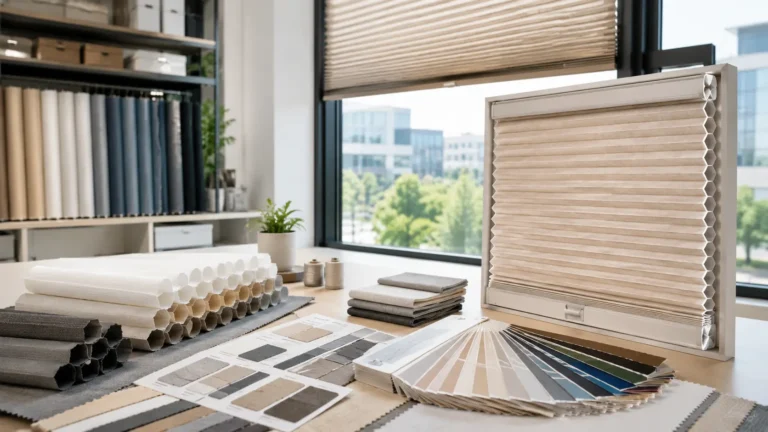
Honeycomb Shade Fabric: A Complete Guide to Performance,
Honeycomb shade fabric combines light control, thermal ins…
READ ARTICLE →
Single Cell vs. Double Cell Honeycomb Shades: Key Differ
Single-cell and double-cell honeycomb shades differ in str…
READ ARTICLE →
How to Choose the Right Pleat Size for Honeycomb Shades
Pleat size affects the appearance, stacking performance an…
READ ARTICLE →